The Storm Shelter Tax Break That Doesn't Follow Your Edmond House to Its New Owner
August 20, 2026
August 20, 2026
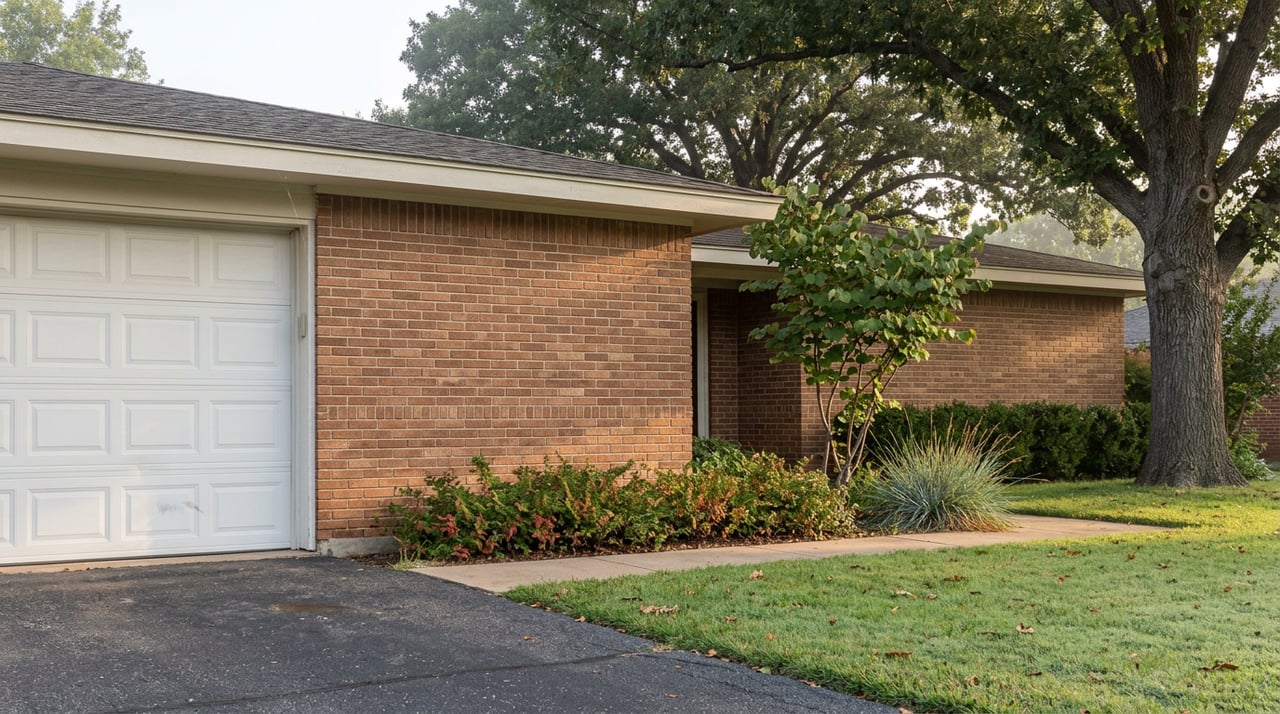
Ask most Edmond homeowners with a storm shelter what happens to their property tax exemption when they sell, and you'll get a shrug. They assume it travels with the house the same way a finished basement or a new roof would. It doesn't. The moment title changes hands, the exemption resets, and the county reassesses the shelter at fair cash value for whoever buys the house next.
That isn't fine print buried in a closing packet nobody reads. It's written into the Oklahoma Constitution, and it changes the math for anyone listing a home with a shelter in Edmond this year, especially with the state's main rebate program sitting unfunded for 2026.
Oklahoma voters approved a constitutional exemption that lets homeowners install a storm shelter of up to 100 square feet without triggering a higher property tax assessment. The Oklahoma Constitution is specific about what happens once a house with an exempt shelter changes hands.
"such storm shelter shall be assessed for that year based on the fair cash value"
That single clause is the whole story. A seller who has enjoyed years of untaxed shelter value hands the buyer a house where the county will fold that shelter back into the assessed value the year after closing. The buyer doesn't inherit the exemption. The buyer has to apply for it fresh, using Oklahoma Tax Commission Form 905, filed with the county assessor after the sale closes.
Most listing conversations in Edmond focus on square footage, school proximity, and lot size. The shelter's tax status rarely comes up, which means it rarely gets handled at the right moment.
A shelter isn't a single line item. It's a small stack of paperwork that has to change hands cleanly for the new owner to keep the tax treatment intact and for the shelter itself to be verifiable during the transaction.
| Document | Who originally filed it | What happens at sale |
|---|---|---|
| Building permit | Seller, at installation | Stays in city records; buyer can request a copy from Building & Fire Code Services |
| Plot Plan / setback documentation | Seller, required by the City of Edmond before installation | Useful for buyer's due diligence, not automatically transferred |
| Emergency Management shelter registration | Seller, voluntary but recommended | Should be updated with new owner's contact information |
| OTC Form 905 exemption | Seller, filed with county assessor | Void at transfer; buyer must file a new one |
The City of Edmond requires a permit for any new shelter installation, and that permit process includes a site-specific Plot Plan showing the shelter's distance from property lines and the main structure, along with setback rules that keep it clear of utility lines. None of that paperwork disappears when a house sells, but none of it automatically follows the deed either. A seller who can hand a buyer the permit, the plot plan, and the registration record turns an unverifiable feature into a documented one, which matters more than most sellers expect once showings start.
Edmond sits inside the part of the country where storm shelters are close to standard inventory, not a luxury upgrade. Look at active Edmond listings right now and shelters show up as a marketed feature across neighborhoods like Fairfax Estates, Oak Tree, and Chimney Hill, with that segment of inventory carrying a median asking price near $445,000 as of early August 2026. Buyers expect to see the feature. That expectation is exactly why sellers overestimate what it adds to the sale price.
Installation typically runs $3,000 to $10,000 depending on whether it's a garage-floor safe room or a below-ground unit. The return at resale is a fraction of that. Contractors and shelter installers who track resale outcomes consistently land in the $2,000 to $5,000 range, and a frequently cited study by an economics professor at Austin College put the average home value increase at 3.5 percent, not a dollar-for-dollar recovery of the installation cost. A shelter installed with resale as the primary motive rarely pays for itself. It pays for itself as a safety decision, with resale value as a secondary benefit.
Homeowners who installed a shelter in the last few years often factored in the state's SoonerSafe rebate, which historically covered up to 75 percent of installation costs, capped around $3,000, distributed through a lottery-style drawing. That rebate isn't part of the current calculation. The Oklahoma Department of Emergency Management's own program page states plainly that the 2026 rebate cycle is not open, and reporting from KJRH confirms the program has not received the FEMA hazard mitigation funding it needs to reopen this year.
For anyone installing a shelter now with an eye toward eventually recovering some of the cost, that removes a lever that used to soften the equation. The installation cost stands on its own, the resale bump stands on its own, and the two no longer meet in the middle the way they might have a few storm seasons ago.
Shelters generate real questions during showings, not passing interest. Buyers in tornado-prone markets ask about shelter documentation in a large majority of showings where one is present, according to industry data on tornado shelter resale value. The questions tend to repeat themselves:
A seller who can answer all five before the first showing turns a feature that usually raises questions into one that closes them.
Does the exemption disappearing at sale mean the shelter loses value? No. It means the tax benefit and the resale value are two separate things that shouldn't be confused. The shelter still shows up as a feature buyers look for in Edmond, and it may still support a slightly higher asking price. The tax exemption is a separate, owner-specific benefit that has to be re-established by whoever buys next.
Should a seller file anything before closing to make this easier for the buyer? There's no form a seller files to transfer the exemption, since it isn't transferable. The most useful thing a seller can do is gather the permit, the plot plan, and the registration record so the buyer's Form 905 filing goes smoothly and the shelter's documentation is ready the day a buyer asks.
None of this changes whether a storm shelter is worth having. It changes what a seller should expect it to do for the sale price, and what paperwork should be sitting in a folder before the first showing rather than scrambled together the week of closing.
If you're weighing a listing in Edmond and want a clear read on how a storm shelter, or any other feature, actually plays into your home's current market position, Lori Morrissey offers a free home valuation built around what's happening in your specific neighborhood right now, not a national average that doesn't know your street.



With over two decades of experience, exceptional market knowledge, and a commitment to community growth, you'll receive expert guidance, personalized service, and proven results every step of the way.

Morrissey, Lori Lynne | CA DRE# 01362129
Stratton - LFCA, Inc. | CA DRE# 02211662
[email protected]
(818) 395-5212
License #23345566
Encino, CA 91316