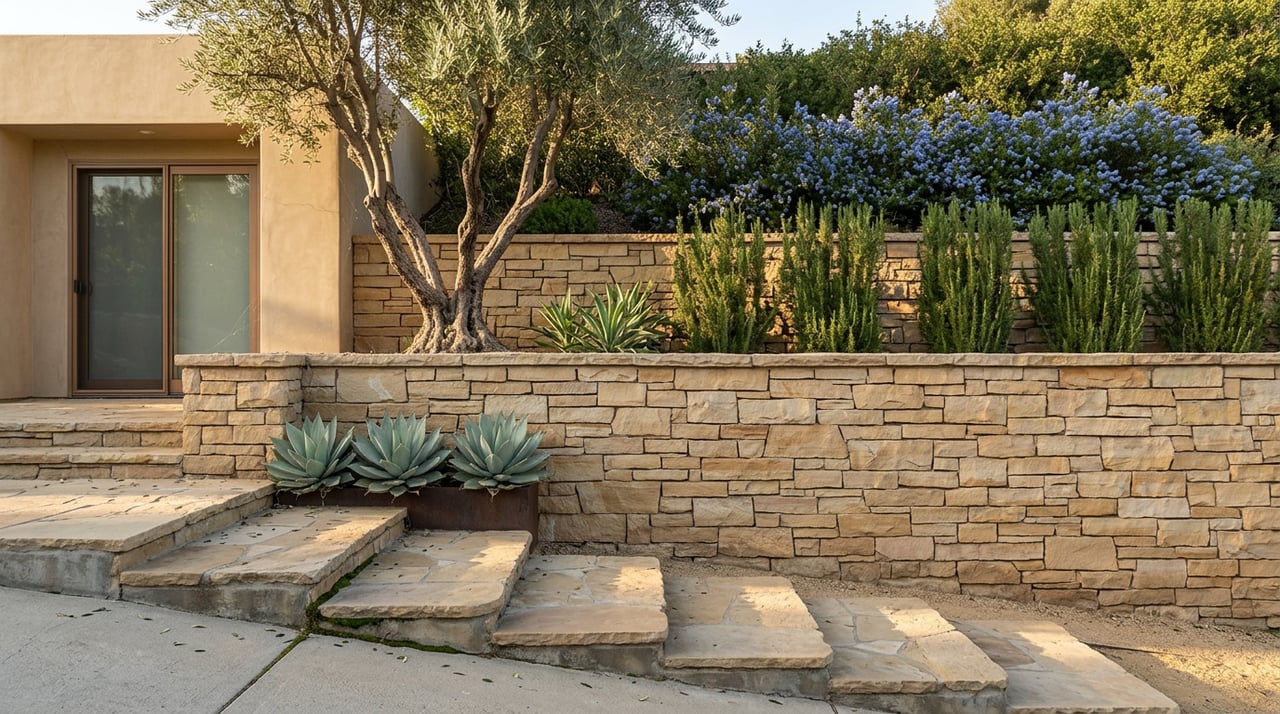
Why Hillside Escrows in Tarzana Run Longer Than the Flats
August 13, 2026
August 13, 2026
Ask a buyer why a Tarzana hillside escrow is taking three extra weeks and most will guess the same thing: it's a smaller buyer pool, or the seller is greedy on price. Neither explanation holds up once you look at what's actually happening in escrow. The delay isn't about demand. It's about a stack of paperwork that a flats sale in Tarzana never has to run at all.
Ventura Boulevard is the hinge that splits this neighborhood in two. North of it sits the flats, a grid of mid-century ranches and newer builds walkable to the retail corridor. South of it, the streets climb into the foothills of the Santa Monica Mountains, into gated enclaves like Braemar Country Club Estates, Mulholland Park, and the guard-gated Silverhawk Ridge. Anyone shopping Tarzana on a portal has already seen a median price. What that median hides, and what actually slows a hillside closing down, is a sequence of code-triggered checks that has nothing to do with how many buyers are circling the listing.
Appraisers already know not to cross Ventura Boulevard for comps. A closed sale on a flat street north of the boulevard isn't a comparable for a hillside home two blocks south, even if the square footage lines up. Buyers pricing off a home-value tracker often don't know that distinction exists, and it shapes both the offer they write and the appraisal that has to support it later.
The blended numbers make the problem obvious. Zillow's Home Value Index put Tarzana at roughly $1.17 million as of the February 2026 update, and Redfin's blended three-month median has been running near $1.2 million as of mid-2026. Neither number describes an actual house, because the flats and the hills are pulling in opposite directions. Here's what the same 91356 ZIP code looks like once you split it:
| Sub-market | Typical range |
|---|---|
| Flats, entry-level ranch | Around $900,000 |
| Flats, new construction | Up to $6 to $7.5 million |
| Hillside, half-acre-plus lots | $2 million to $4 million |
| Gated hillside estates with valley views | $5 million to $8 million |
As of March 2026, zip 91356 carried a Market Action Index reading of 35, a slight seller's advantage, with a median list price of $2,397,000 and roughly $727 per square foot. Flats listings that same season were averaging around two offers with 43 to 57 days on market. The hillside segment moves slower on both sides of the transaction, and the reason isn't a thin buyer pool.
Here's the mechanism buyers and sellers both miss. A hillside sale in Tarzana runs through three separate document sequences that a flats sale skips entirely: a two-zone seismic disclosure check, a geotechnical inspection period that functions as a negotiating tool even when nothing is being built, and a wildfire-zone insurance binder that takes longer to clear than it does on a flats sale. Each step is short on its own. Stacked back to back inside a standard inspection contingency window, they eat the calendar fast.
A seller who orders these reports before listing controls the timeline. A seller who waits for the buyer's team to discover them mid-escrow hands the buyer leverage and loses weeks that were never necessary to lose.
California runs two separate seismic mapping programs, and a hillside property in Tarzana can fall into either one, both, or neither. The Alquist-Priolo Earthquake Fault Zone Act targets surface fault rupture specifically. No new single-family dwelling can be built across an active fault trace, and a 50-foot setback applies. Separately, the Seismic Hazard Mapping Act designates Zones of Required Investigation for liquefaction, earthquake-induced landslides, and amplified ground shaking. Each zone has its own line item on the Natural Hazards Disclosure Statement and its own trigger for a site-specific investigation.
An agent who conflates the two systems can't reliably advise on offer timing or due diligence, because the questions each zone raises are different. The California Geological Survey's mapping portal allows a parcel-specific lookup for both zone types, and pulling that map before an offer is written, not during the inspection period, is what keeps a seismic finding from becoming a surprise midway through escrow.
Buildings over 500 square feet on hillside parcels require a preliminary geology and soils report at least 10 days before permit issuance under LAMC Division 70. Grading over 1,000 cubic yards triggers the same requirement.
That code section applies to new construction and major additions, not to a straightforward resale. But a geotechnical report commissioned during the inspection period on an existing hillside home serves a different purpose than it does for a building permit. It's due diligence, and it's also a negotiating document. A soils report can surface drainage problems, slope movement, expansive soils, or fill conditions that a visual walkthrough never catches. Every finding becomes a possible price reduction, a repair credit, or a reason to walk before the deposit is at risk.
This is why a hillside inspection period looks different from a flats inspection period on paper. The checklist adds retaining walls, drainage paths, slope stability, and secondary access to whatever a general home inspector already covers, and each of those items can call for a specialist rather than a generalist.
Retaining walls are the part of a hillside property that a buyer can see and still misjudge. Walls built before Los Angeles adopted its 1963 grading ordinance are a known category of risk across the city's hillside neighborhoods, because they may have gone up without engineering, without inspection, and without a drainage system behind them. A general home inspector can flag a wall that looks distressed, but diagnosing the actual cause, water, original construction, or loading above the wall, is a job for a licensed structural engineer, sometimes paired with a geotechnical engineer if slope behavior is in question. A straightforward structural evaluation runs a low four-figure cost. Once the question escalates to a full geotechnical investigation, the cost moves into five figures, and that escalation itself tells you something: the concern is no longer the wall, it's the ground underneath it.
The last piece is the one that catches people off guard closest to the finish line. Wildfire hazard zone classification affects how long an insurance quote takes to bind, and hillside parcels in Tarzana's foothill streets sit in zones that take longer to underwrite than flats properties a few blocks away. A contingency period written on flats-market timing can run out before the binder is in hand. Building an extra week into the schedule isn't caution for its own sake, it's matching the contract to how long the insurance step actually takes on this side of the boulevard.
None of this makes a hillside sale harder to close. It makes it more sequential, and sequence is exactly the kind of thing a seller can get ahead of before a single showing happens.
Does every hillside home in Tarzana require a soils report? Only new construction or major additions trigger a mandatory report under LAMC Division 70. On a resale, a geotechnical report is optional, but skipping it means finding out about drainage or slope issues after an offer is already in, not before.
Why doesn't a flats sale count as a comp for a hillside listing? Lot size, grading, access, and view all shift once you cross Ventura Boulevard, and appraisers already price that difference in. A blended median or a Zestimate doesn't.
How much extra time should a hillside buyer budget for closing? Enough to cover an insurance binder that takes longer to underwrite in a wildfire hazard zone and, if a soils report gets ordered, enough runway for a structural or geotechnical engineer to turn around findings before the inspection contingency expires.
If you're weighing a hillside property in Braemar Country Club Estates, Mulholland Park, Silverhawk Ridge, or anywhere else south of the boulevard, the sequencing above is exactly what determines whether escrow closes on schedule or drags into a renegotiation. Lori Morrissey has spent two decades working both sides of Ventura Boulevard and knows which reports to order first. Reach out for a free home valuation and a clear read on what your specific parcel will require before it ever hits the market.
With over two decades of experience, exceptional market knowledge, and a commitment to community growth, you'll receive expert guidance, personalized service, and proven results every step of the way.

Morrissey, Lori Lynne | CA DRE# 01362129
Stratton - LFCA, Inc. | CA DRE# 02211662
[email protected]
(818) 395-5212
License #23345566
Encino, CA 91316